
At PRIA International Academy, we design online self-learning courses that help students, professors, development professionals and public administrators build practical skills for real-world development challenges.
Our online self-learning courses are an opportunity for learners to engage in self-paced learning through engaging, creative and informative pedagogies. These online courses have been designed keeping the learners' needs at the centre, ensuring that the learning outcomes align with the contemporary requirements of the development and non-profit sectors. Each of these courses engage learners for a maximum duration of 10 hours, ensuring that they can be completed alongside their primary responsibilities.
PIA courses combine academic rigour with lessons drawn from four decades of participatory practice at PRIA. Our online self-learning courses also provide options for CSR professionals who need sector-specific tools and examples. Join a learning community that values practice, reflection and steady skill building.
Since 2005, a total of 6,563 people worldwide have enrolled in PIA's online self-learning courses.
If you are seeking a participatory training that foreground community methods and accountability, you will find content built for immediate use.

Beginner’s Guide to Social Accountability and Participation
An introduction to social accountability that explores how citizen participation strengthens transparency, service delivery, and democratic governance.
Governance is realised by citizens through their access to services such as health, education, sanitation, identification documents, transportation, and more....
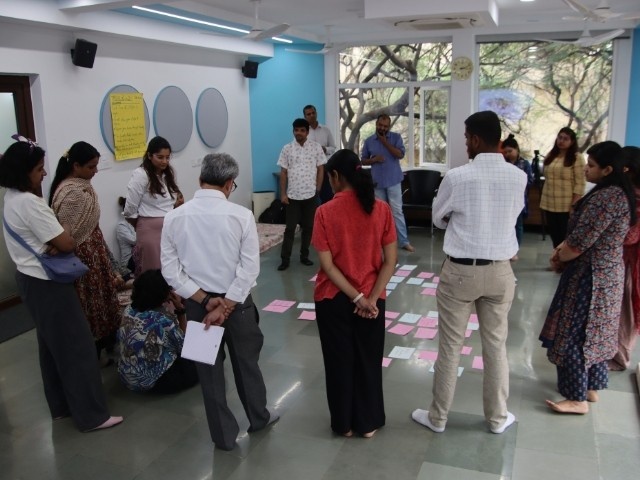
Facilitating Learning: An Introduction to Participatory Training Methodology
A course that helps you learn how to plan and facilitate interactive trainings using participatory and experience-based methods.
This foundational course offers an introduction to participatory training - a methodology rooted in adult learning principles that values experience-sharing,...

Participatory Research in Practice: Advanced Participatory Methods for Collective Action and Social Change
Advanced Participatory Methods for Collective Action and Social Change is designed for learners who already have a foundational understanding of participatory research.
This advanced course on Participatory Research in Practice: Advanced Participatory Methods for Collective Action and Social Change is designed for...

Introduction to Sport for Development
Explore how sport can drive social change, empower communities, promote inclusion, and contribute to sustainable development.
Sport has enjoyed universal appeal for much of human history and its importance to society continues to be the object...
Participatory Research - A Journey Beyond Conventional Research
A global introduction to Participatory Research, exploring its principles, tools, and community-driven approach to knowledge and social change.
Participatory Research (PR) emerged globally as a response to the limitations of conventional, top–down research that often excluded the voices...

Understanding Panchayati Raj Institutions (PRI): Decentralisation, Democracy and Local Governance
A beginner-friendly course on how Panchayati Raj empowers local governments and strengthens grassroots democracy in India.
Panchayats are the basis of decentralised democracy in India. As constitutionally recognised local governments, they stand at the centre of...
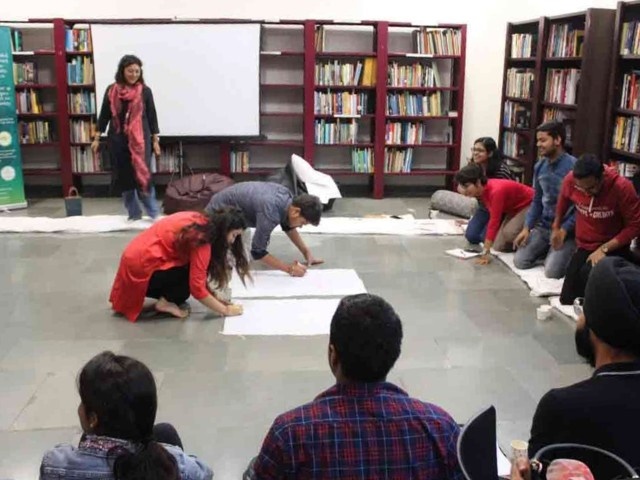
Measuring Development: Participatory Monitoring, Evaluation and Impact Assessment
Build practical skills to plan, monitor, evaluate, and measure the impact of development initiatives using participatory methods.
How can we measure development? In recent years, concerns about effective management and results-oriented approaches to development projects and programmes...
Gender Realities - Identities, Inclusion and Development
A course that explains how gender shapes power, inequality, and everyday life and how we can work toward more inclusive, gender-just societies.
Gender is among the most powerful forces that shape inpidual experiences, identities, and social behaviours in everyday life. Understanding gender...
FAQs
PRIA’s online self-learning courses are open to students, development professionals, CSR personnel, policymakers, government and public officials, researchers, and anyone interested in participatory methodologies or whose learning needs and outcomes align with the contemporary requirements of the development and non-profit sectors.
The courses cover a wide range of development-focused themes, including participatory training, social accountability, working with Panchayats, gender and development, governance, sport for development, and monitoring and evaluation, among others.
Yes, learners can progress through the courses at their own pace within the given course duration, which is usually 2 weeks.
Most courses available on the platform can be completed within approximately 10-12 hours of learning time.
Yes, learners receive a certificate upon successful completion of the course.
The courses are designed for beginner, intermediate, and advanced learners. Participants can enrol in courses based on their personal learning needs and requirements, and no specific prerequisites are required.
After registering and enrolling, participants receive login details for the learning platform. All course materials are then accessible online through PRIA Academy’s learning platform.
For some courses, participants will have the opportunity to interact with instructors and fellow learners directly on the Moodle platform. Participants are also welcome to write to us at pia@pria.org for any queries.
You can register and make payments directly through the PRIA Academy website by selecting your chosen course.
Each course is designed to strengthen skills relevant to careers in development, CSR, governance, training, research, and community-based programmes.