
PIA today has over 2000 alumni from 35 countries and has linkages with several universities in India and Canada for course development, course teaching and internships.
Governance is realised by citizens through their access to services such as health, education, sanitation, identification documents, transportation, and more. The effectiveness and relevance of these services determine the quality of governance systems. Access to these services is particularly difficult for the poor, vulnerable, and marginalised, who often either pay for sub-standard services or are deprived of services altogether.
This has led to the emergence of social accountability practices, which aim to hold individuals, organisations, and institutions responsible for inefficiencies or lack of service. Social Accountability can only work effectively, however, when citizens are meaningfully able to demand action from powerful institutions - making social participation an essential part of the equation.
The course “Beginner’s Guide to Social Accountability and Participation” serves as a structured introduction to social accountability training, equipping learners with the basic approaches for building accountability relationships between citizens and governance institutions.
It emphasises citizen participation and positions it as a cornerstone of just and participatory governance applicable equally in civil society, government, and across governance programmes and development sector programmes.
| Modules | What will you learn? |
| Module 1: Understanding Accountability and Social Accountability |
|
| Module 2: Social Accountability Mechanisms and Tools |
|
| Module 3: Challenges and Pathways in Social Accountability |
|
This social accountability course is designed for development sector professionals, students, programme managers and coordinators, grassroots implementers, organisational leaders, corporate social responsibility personnel, researchers, academicians, trainers, consultants, and policymakers.
It is equally relevant for anyone working within or alongside a citizen engagement platform - whether institutional or community-based and for anyone who wants to understand how social accountability is a cornerstone of just and participatory governance.
The course equips you with a practical foundation in social accountability, helping you understand how citizens actively engage with governance institutions to demand transparency and better services.
As a structured social accountability course experience, it builds your ability to use real tools from community score cards to citizen charters in your own professional context.
Whether you are navigating CSR or development role or working at the grassroots level, you will gain vocabulary and frameworks that apply across sectors.
The course strengthens your capacity to contribute to social participation and positions you to engage more effectively with any citizen engagement platform - institutional or community-based.
The course is structured into multiple modules, providing learners with a comprehensive understanding of social accountability and citizen participation through interactive and engaging modes of learning, including text, videos, audios, case studies, graphics, assignments, and additional reading materials. It is advised that you complete this social accountability course in a quiet environment to enhance your learning, given that the material in the course might be sensitive in nature.
Additionally, a stable and high-speed internet connection is essential to ensure smooth access to all course content.
You will have two weeks to complete the entire course, from the date of signing-up and receiving your login details. You can save your progress at any point and come back to the course within this two-week period. You can use different devices to complete the course, such as laptops/ desktops, smartphones and tablets.
Upon successful completion, including completing all assignments, learners will receive a certificate.
Dr. Kaustuv Kanti Bandyopadhyay – Author
Director and Lead (Civil Society and Inclusive Urbanisation), PRIA, India
Expertise: Organisational Development, Strategic Planning, Social Accountability, Participatory Planning, Participatory Monitoring Evaluation, and Impact Evaluation, Participatory Research
Ms. Nikita Rakhyani – Author
Lead – PRIA International Academy, PRIA, India
Expertise: Participatory Research and Training, Community Engagement, Program Management and Governance
Mr. Sujit Sourav – Technical Support
Manager – Knowledge Management and Education, PRIA, India
Expertise: Moodle Platform Management, IT Troubleshooting

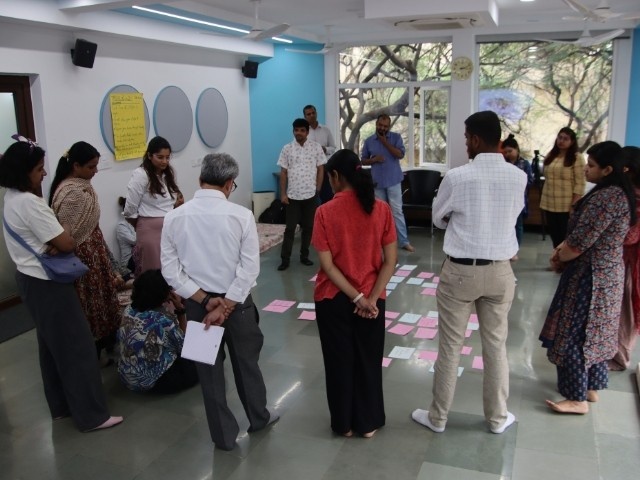
A course that helps you learn how to plan and facilitate interactive trainings using participatory and experience-based methods.
A course that helps you learn how to plan and facilitate interactive trainings using participatory and experience-based methods.
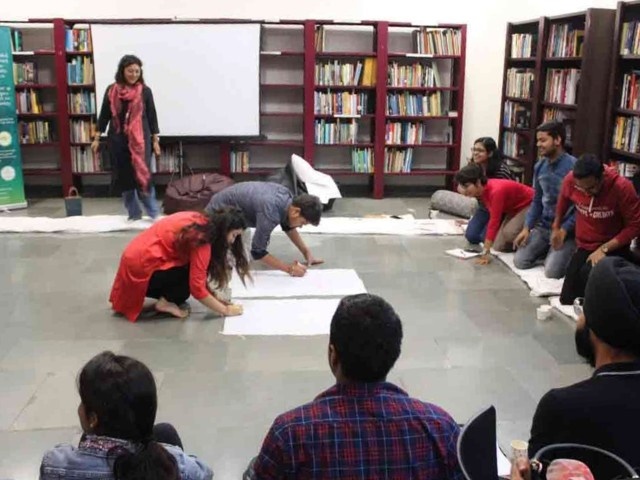
Build practical skills to plan, monitor, evaluate, and measure the impact of development initiatives using participatory methods.
Build practical skills to plan, monitor, evaluate, and measure the impact of development initiatives using participatory methods.

A course that explains how gender shapes power, inequality, and everyday life and how we can work toward more inclusive, gender-just societies.
A course that explains how gender shapes power, inequality, and everyday life and how we can work toward more inclusive, gender-just societies.

A beginner-friendly course on how Panchayati Raj empowers local governments and strengthens grassroots democracy in India.
A beginner-friendly course on how Panchayati Raj empowers local governments and strengthens grassroots democracy in India.

A global introduction to Participatory Research, exploring its principles, tools, and community-driven approach to knowledge and social change.
A global introduction to Participatory Research, exploring its principles, tools, and community-driven approach to knowledge and social change.
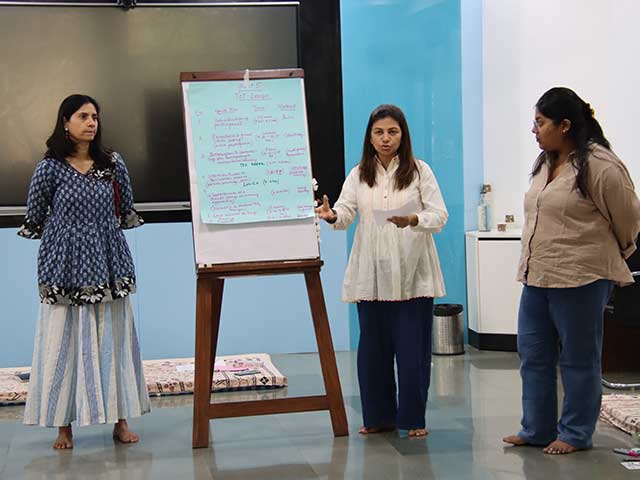
Developing an understanding of the benefits of using the Theory of Change approach in development planning, monitoring, and impact assessment.
Developing an understanding of the benefits of using the Theory of Change approach in development planning, monitoring, and impact assessment.

Advanced Participatory Methods for Collective Action and Social Change is designed for learners who already have a foundational understanding of participatory research.
Advanced Participatory Methods for Collective Action and Social Change is designed for learners who already have a foundational understanding of participatory research.
No reviews yet. Be the first to review this course!