At PRIA International Academy, our hybrid training workshops are designed to give you the best of both worlds: the flexibility of online learning and the hands-on experience of in-person workshops. We organise and deliver our own expert-led training sessions; while also designing customised training solutions for organisations based on their team’s specific learning needs.
Whether you’re a student, professional, or practitioner, these workshops help you dive deeper into your field and apply what you learn in real-life situations.
How the Hybrid Training Works?
- Our hybrid training methods are thoughtfully structured to make learning effective and engaging:
- Online self-learning (1 week): Learn at your own pace with carefully designed online modules.
- Live webinar (1 - 2 hours): Connect with trainers and peers to discuss concepts and clarify doubts.
- In-person workshop (3 - 5 days): Apply your knowledge through interactive, practical sessions.
Workshops are scheduled at different times throughout the year, so you can plan ahead. Seats are limited, so it’s best to register early.
Why Join PRIA’s Hybrid Workshops?
Since 1982, over 30,000 learners have benefited from our training programs, gaining valuable skills through a blend of online and offline learning. Our experienced trainers guide you every step of the way, ensuring you get both knowledge and practical exposure.
Past Hybrid Training Workshop

Water Quality Testing Training for SHG Women
A hands-on program training SHG women to test and monitor local water quality using simple tools and social mapping, highlighting its link to public health.
- Train SHG women to understand the importance of water quality testing, map water sources in their community, and develop practical skills to conduct tests independently.
- Highlight the significance of water quality testing for building safe and healthy communities.
- Introduce the concept of social mapping and its application in identifying local water sources.
- Explore the connection between water quality and public health, with special attention to vulnerable groups.
- Provide step-by-step guidance on conducting water quality tests using simple tools and techniques.
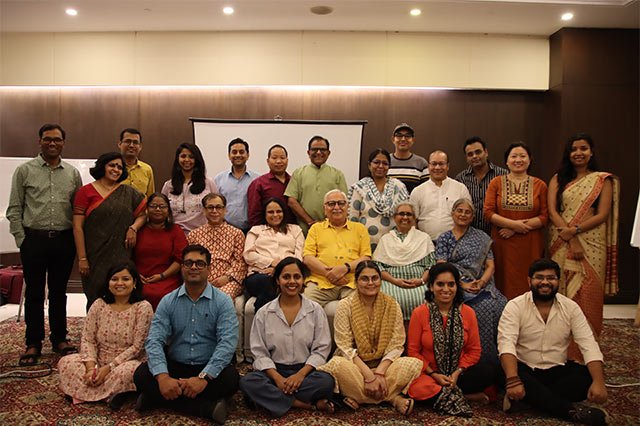
Workshop on Participatory Training Methodology
A 3-day, practice-focused Training of Trainers (ToT) that helps facilitators and educators move from theory to action.
This 3-day Training of Trainers (ToT) on Participatory Training Methodology is designed for facilitators, educators, youth leaders, and development practitioners who wish to strengthen their capacity to design and deliver impactful participatory training programmes.
Unlike the online course, which focuses on conceptual understanding, this ToT moves a step further from theory to practice. The focus is on doing, reflecting, and improving. It emphasizes hands-on practice, peer learning, feedback, and reflective facilitation. Participants will engage in real-time facilitation practice, session design, and reflection on trainer identity and facilitation style. Through simulations, role-plays, group work, and feedback sessions, participants will not only learn about participatory training methods but also practice them in real time.
At the end of the training, participants will be able to design and facilitate participatory sessions, incorporate feedback, and articulate their own trainer identity and facilitation style

Youth-led Policy Advocacy and Accountability
This training built the capacity of young leaders to engage in policy advocacy and accountability. It emphasized collaboration, contextual learning, and peer exchange to inspire effective youth-led action.
- Equip participating grantees with strategic insights and tools for effective youth engagement in policy advocacy and accountability.
- Create an enabling environment for grantees to share their experiences and best practices in youth-led policy advocacy and accountability.
- Strengthen collaboration among partners, fostering peer learning and collective problem-solving through synergized efforts.

Participatory Research Methodology
This training deepened participants’ understanding of participatory research principles, ethics, and tools. It combined theory with real-world examples, helping learners design inclusive and community-driven research projects.
- Understanding Participatory Research, including historical roots, principles, and key characteristics.
- Exploring the role of a Participatory Researcher.
- Learning CBPR methods and tools, including methodology with examples from PRIA's program and demonstration.
- Understanding the ethics of Participatory Research.

Introduction to Participatory Research Tools and Approaches
An introductory workshop exploring participatory frameworks, ethical engagement, and community collaboration.
- Develop a comprehensive understanding of participatory approaches, including key concepts, frameworks, and tools.
- Reflect on ethical considerations and practical challenges in implementing participatory approaches.
- Acquire skills to design participatory projects tailored to specific community or organizational contexts.
FAQs
PRIA’s Hybrid Training Workshops are immersive 3-5 day in-person workshops supported by an online self-learning course and a live webinar. Participants first complete the online learning, then join the webinar, and finally attend the in-person workshop, ensuring a strong link between theory and practice.
PRIA’s hybrid training workshops are open to students, development professionals, CSR personnel, policymakers, government and public officials, researchers, and anyone interested in participatory methodologies or whose learning needs and outcomes align with the contemporary requirements of the development and non-profit sectors.
A hybrid training programme includes about one week of online self-learning, a 1-2 hour live webinar, and a 3-5 day in-person workshop, making it a comprehensive blended learning experience.
Yes, participants receive a certificate upon successful completion of the workshop.
Yes, these workshops are designed for both individuals and organisations. Organisations may nominate multiple participants or request customised workshops to be conducted at their own location for their team or staff members.
The blended learning programme enables participants to build a strong conceptual foundation through online learning and deepen their understanding through live interaction and hands-on, in-person workshops. This approach helps participants apply their learning directly to their professional and field contexts, while engaging in a supportive and collaborative learning environment.
You can register by visiting the PIA website and selecting the relevant hybrid training workshop, where you will find details on upcoming programmes and the registration process. If your organisation requires PIA’s support for a specific training for the team, please write to us at pia@pria.org. We would be happy to develop a contextualised learning programme tailored to your organisation’s learning needs and requirements.