
PIA’s learning circles spotlight diverse thematic experts for short and engaging sessions in relaxed and informal settings. Speakers and knowledge experts are engaged with a variety of audiences on specific topics, providing learners the opportunity to gain an introduction to these themes. The format for these learning circles is kept open, providing the experts and the audience a space to engage and interact in a way that is most beneficial to sharing experiences and learnings on the topic.
Seats for each learning circle are limited, so be sure to register well in advance!
Since 2025, a total of 4 learning circles have engaged 49 in diverse thematic areas relevant to the development and non-profit sectors.
Past Learning Circle

Story of Participatory Research
Exploring participatory research and knowledge co-creation
hello
As development challenges become more complex, there is an increasing need for research approaches that are inclusive, democratic, and grounded in people’s lived realities. Participatory research offers a way to generate knowledge through collaboration, dialogue, and shared learning. In this session, Dr. Tandon, a globally recognised pioneer of participatory research, will take learners through the journey of participatory research and introduce mapping as a powerful tool for data collection and knowledge co-creation.
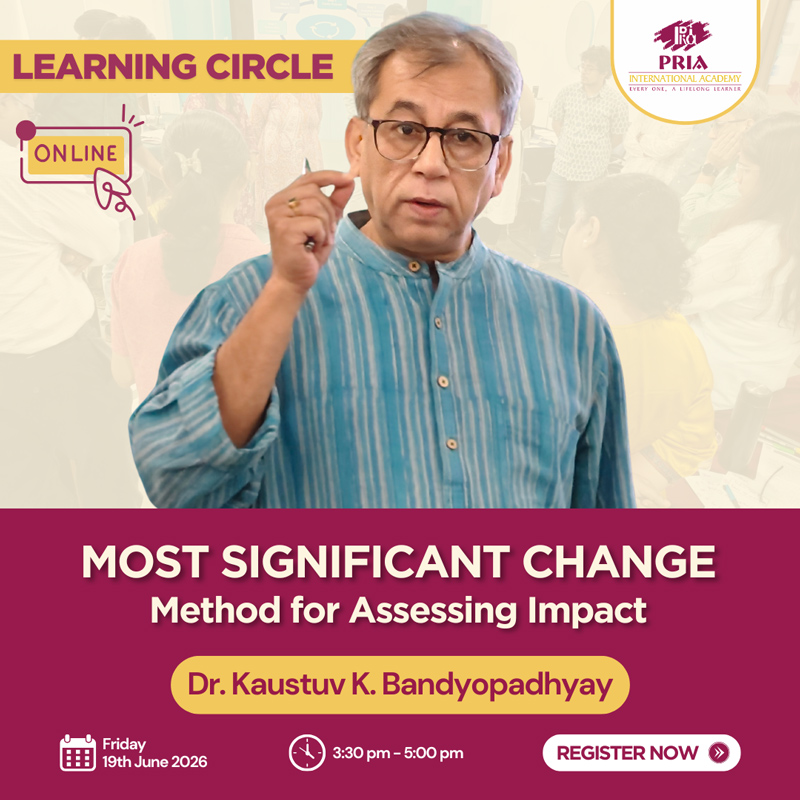
Most Significant Change
Learning about the Most Significant Change method while identifying expected and unexpected changes in monitoring and evaluation processes.
hello
Every programme generates countless stories of change. But how do we identify the changes that matter most?
The Most Significant Change (MSC) method is a participatory approach to monitoring and evaluation that involves multiple stakeholders in identifying, discussing, and analysing the changes brought about by a programme. Moving beyond conventional, quantitative, expert-driven evaluation methods, MSC adopts a qualitative, participant-centred approach that focuses on the human impact of interventions.
In this Learning Circle, Dr. Kaustuv K. Bandyopadhyay, an expert in monitoring and evaluation, will introduce the principles and practice of the Most Significant Change method. Participants will explore how MSC is used in monitoring and evaluation, learn how to analyse impact through stories of change, and discover ways to identify and understand both expected and unexpected changes.
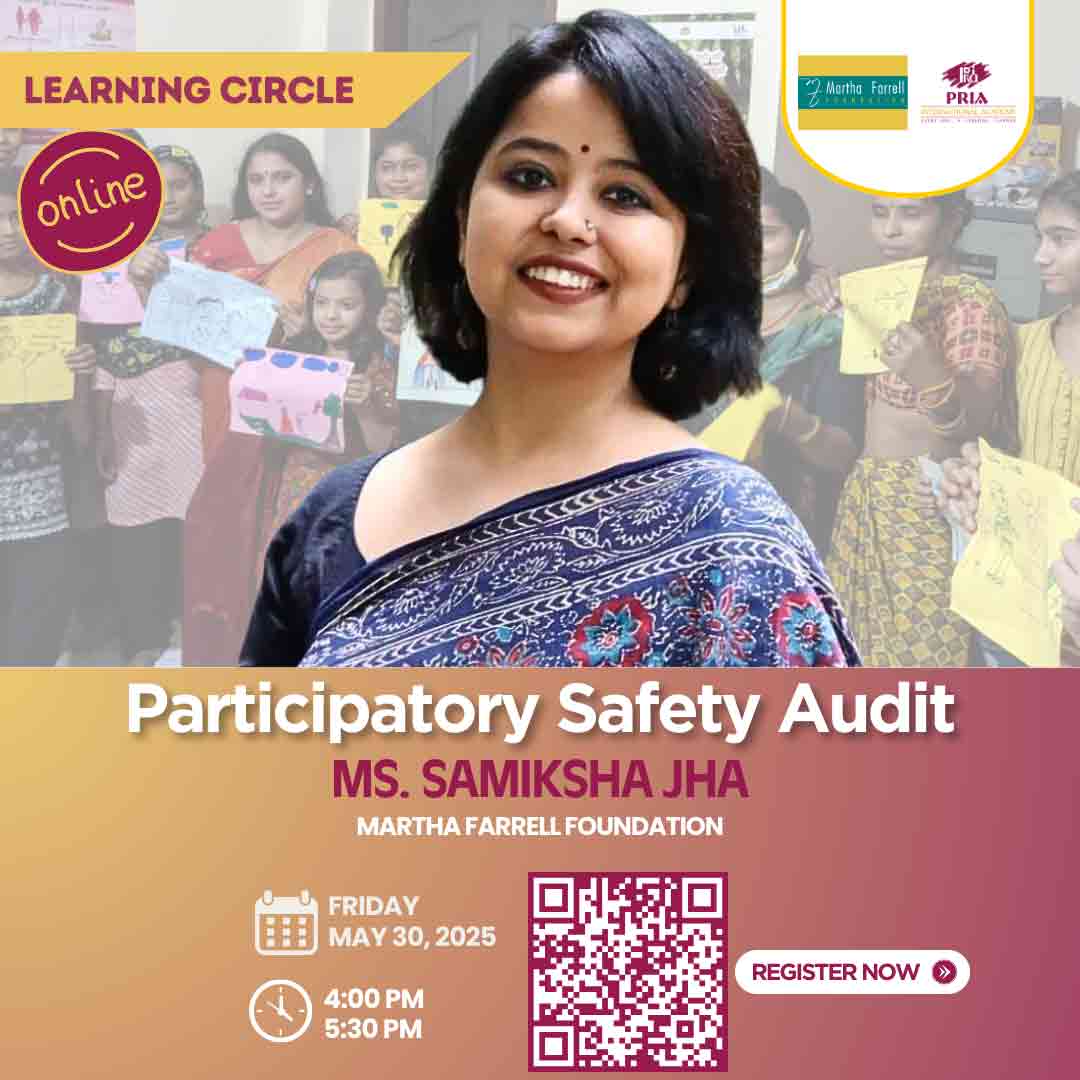
Participatory Safety Audit
PSAs transforming safety experiences into gender-inclusive solutions
hello
There has been a growing recognition that creating safer and more inclusive public spaces cannot be achieved through policies and infrastructure alone. It requires centring people’s lived experiences-especially through a gender lens and actively involving communities in identifying risks and solutions. This Learning Circle on Participatory Safety Audits (PSAs) by Samiksha Jha will explore how PSAs help surface everyday safety concerns and support gender-inclusive, transformative action, drawing on real-world practices led by the Martha Farrell Foundation.
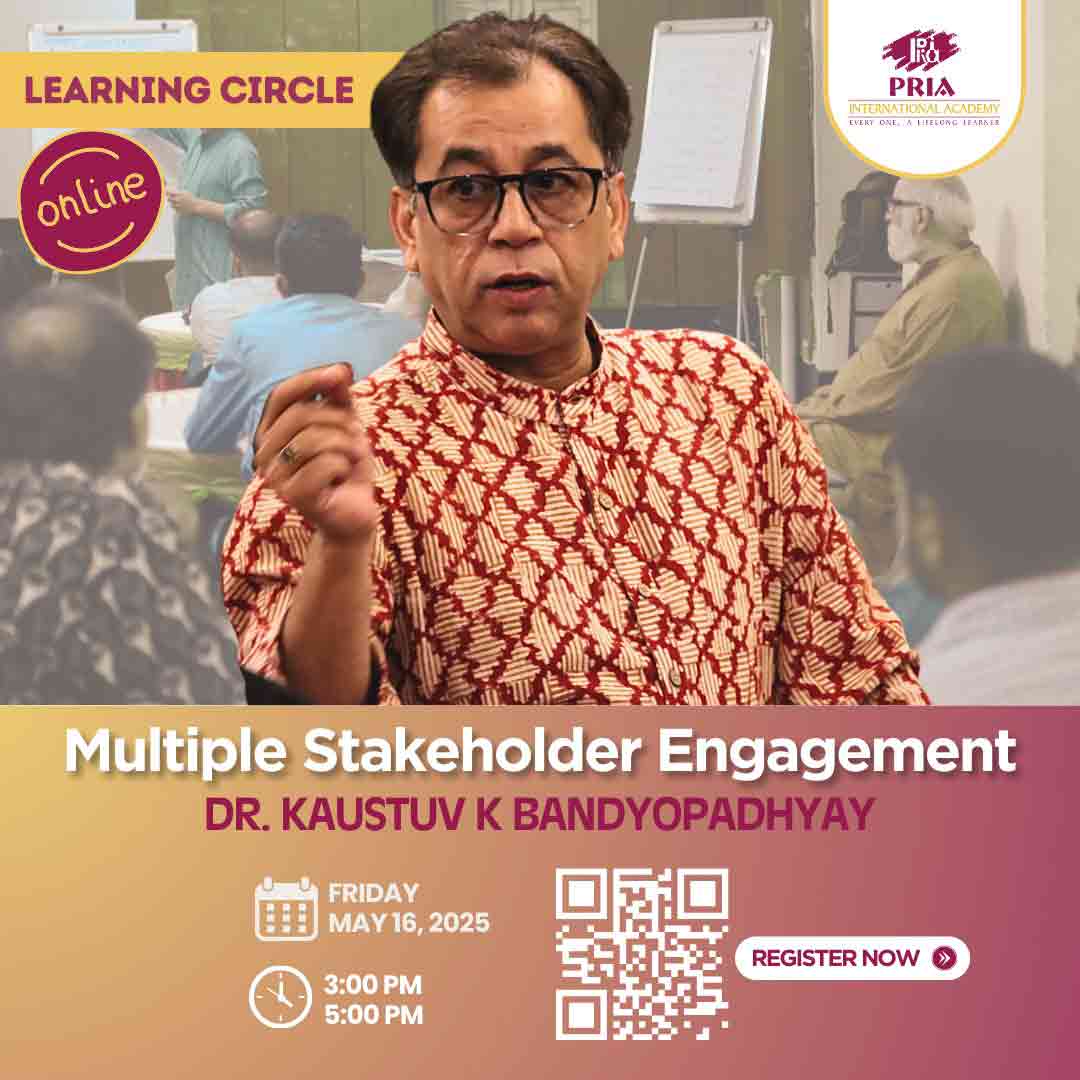
Multiple Stakeholder Engagement
Key essentials for organising effective engagement processes
hello
There has been a growing realisation that a state-led model of development alone cannot fulfill the goals of participation, equity, and justice. Achieving sustainable development requires meaningful participation of all the stakeholders-communities, civil society , local governments, and private sector actors. This session on Multiple Stakeholder Engagement is led by Dr. Kaustuv Kanti Bandyopadhyay, Director- PRIA.

Arts-based Methodology for Research and Engagement
Arts-based methods and Photovoice turn lived experiences into dialogue, insight, and learning
hello
The Arts-based Methodology for Research and Engagement learning circle, hosted by PRIA International Academy, is a three-hour interactive session designed to explore the power of the arts as a medium for research, learning, and social engagement. Arts-based approaches offer creative pathways to connect with communities, policymakers, duty bearers, and government institutions, enabling participatory exploration of complex social issues.
This session will feature insights from global practitioners who apply artistic processes in their research and engagement efforts across diverse contexts. Participants will also gain hands-on experience with Photovoice, a participatory visual research tool that enables communities to represent their realities through photography- promoting collective reflection, dialogue, and co-ownership of local challenges.
The session will conclude with a reflective discussion led by Dr. Catherine Etmanski, who will connect participants’ experiential learning to the theoretical underpinnings of arts-based methodologies. Drawing on her extensive work in transformative learning, Dr. Etmanski will share reflections on how creative expression and symbolism contribute to social transformation and participatory pedagogy.
FAQs
PRIA Academy’s Learning Circles are short, interactive sessions where thematic experts engage with participants in informal, discussion-based settings to introduce and explore key topics and concerns across a range of development themes.
Learning Circles are open to students, development and non-profit professionals, educators, researchers, practitioners, and anyone interested in learning from thematic experts through interactive, engaging, and safe discussion spaces.
Each Learning Circle focuses on a carefully selected theme led by a subject expert, enabling participants to explore emerging ideas, practical approaches, and real-world experiences through discussion and shared learning. Topics may include arts-based research methods, gender and inclusion, governance, youth engagement, community practice, and related areas.
Learning Circles follow a facilitated, interactive format in which a thematic expert introduces a topic and guides participants through activities, open discussions, and experience sharing. The sessions are designed to be informal and collaborative, creating a safe space for dialogue, reflection, and peer learning.
Learning Circles are conducted in both online and offline formats. These are typically short, discussion-based sessions lasting 1.5 to 4 hours, depending on the topic.
Learning Circles enable participants to learn directly from thematic experts, engage in interactive activities and discussions, exchange experiences with peers, and gain practical insights that can be applied to their work, research, or community engagement. They also provide opportunities to connect with diverse and like-minded individuals.
You can register by visiting the PIA website, selecting the relevant Learning Circle, and completing the online registration process. As seats are limited for each session, we encourage you to register as soon as you find a Learning Circle that interests you.