
PIA today has over 2000 alumni from 35 countries and has linkages with several universities in India and Canada for course development, course teaching and internships.
Participatory Research (PR) emerged globally as a response to the limitations of conventional, top–down research that often excluded the voices of communities and marginalised groups
Across Latin America, Africa, Asia, and Indigenous societies worldwide, alternative knowledge systems have shaped how communities analyse their realities and co-create solutions.
This tradition of community research, where inquiry is driven by and with communities, not merely about them, is the foundation on which this course is built.
This course provides a foundational understanding of Participatory Research as a global movement, exploring how the participatory research approach challenges traditional research paradigms and foregrounds community knowledge, co-learning, and democratic participation.
It introduces learners to the principles that underpin community-based participatory research methodology and examines how these principles have been applied across diverse contexts worldwide.
Through this course, learners will gain exposure to:
| Modules | What will you learn? |
| Module 1: Understanding the Paradigm of Participatory Research |
|
| Module 2: Emergence of Participatory Research Paradigm |
|
| Module 3: Understanding Field Research within the paradigm of Participatory Research |
|
| Module 4: Local Basic Participatory Research Tools |
|
| Module 5: Participatory Learning and Action |
|
This course is designed for students, researchers, grassroots workers, development practitioners, researchers, NGO workers, field facilitators, and community leaders interested in socially engaged, people-centred research.
This course gives a clear, globally grounded introduction to community-based participatory research methodology - understanding not just what it is, but why it emerged and how it differs from conventional research.
You will develop a critical participatory research approach that places communities at the centre of the inquiry process rather than as subjects of it.
The course is structured into multiple modules providing learners with a comprehensive understanding of the participatory research approach and community-based participatory research methodology through interactive and engaging modes of learning, including text, videos, audios, case studies, graphics, assignments, and additional reading materials.
Drawing on PRIA’s four-decade engagement with participatory research across Asia, this course is grounded in field experience as much as in theory.
It is advised that you complete this course in a quiet environment to enhance your learning. Additionally, a stable and high-speed internet connection is essential to ensure smooth access to all course content.
You will have two weeks to complete the entire course, from the date of signing up and receiving your login details. You can save your progress at any point and come back to the course within this two-week period. You can use different devices to complete the course, such as laptops/ desktops, smartphones, and tablets.
Upon successful completion, including completing all assignments, learners will receive a certificate.
Dr. Kaustav Kanti Bandyopadhyay - Course Author
Director and Lead (Civil Society and Inclusive Urbanisation), PRIA, India
Expertise: Organisational Development, Strategic Planning, Social Accountability, Participatory Planning, Participatory Monitoring Evaluation, and Impact Evaluation, Participatory Research
Dr. Furzee Kashyap - Course Author
Service Engagement Specialist, PRIA, India
Expertise: Gender Studies, Public Health & Nutrition Interventions, Capacity Building
Ms. Shashi Shikha- Course Author
Director-Kikaboni Living Pvt Ltd.
Expertise: Community Engagement, Participatory Research and Training
Mr. Sujit Sourav- Technical Support
Manager – Knowledge Management and Education, PRIA, India
Expertise: Moodle Platform Management, IT Troubleshooting
Dr. Rajesh Tandon – Course Advisor
Founder-President, PRIA, India
Co-Chair, UNESCO Chair in Community Based Research and Social Responsibility in Higher Education
Expertise: Participatory Research and Training Methodologies, Democratic Governance, Civil Society, Social Responsibility of Higher Education, Citizen Participation, Governance and Management of NGOs, People-centred Development
Suheil Farrell Tandon – Mentor
Founder-Director, Pro-Sport Development
Expertise: Participatory Development, Research and Evaluations, Programme Designing, Sports Coaching, Curriculum Development, Stakeholder Management
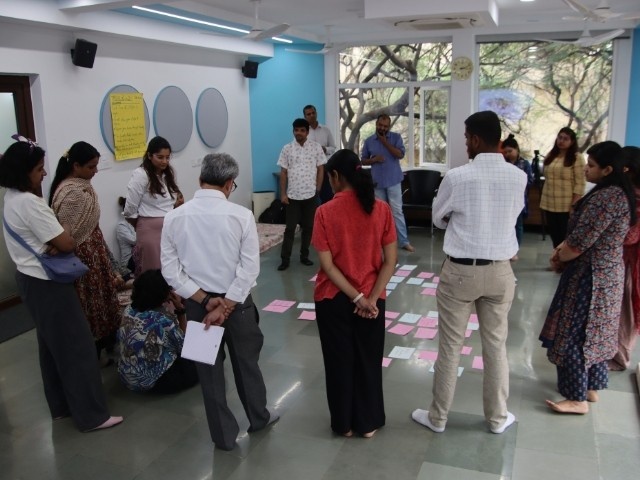
A course that helps you learn how to plan and facilitate interactive trainings using participatory and experience-based methods.
A course that helps you learn how to plan and facilitate interactive trainings using participatory and experience-based methods.
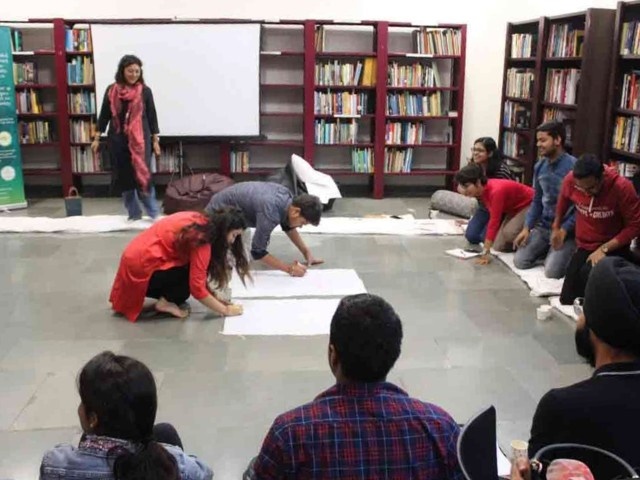
Build practical skills to plan, monitor, evaluate, and measure the impact of development initiatives using participatory methods.
Build practical skills to plan, monitor, evaluate, and measure the impact of development initiatives using participatory methods.

An introduction to social accountability that explores how citizen participation strengthens transparency, service delivery, and democratic governance.
An introduction to social accountability that explores how citizen participation strengthens transparency, service delivery, and democratic governance.
A course that explains how gender shapes power, inequality, and everyday life and how we can work toward more inclusive, gender-just societies.
A course that explains how gender shapes power, inequality, and everyday life and how we can work toward more inclusive, gender-just societies.

A beginner-friendly course on how Panchayati Raj empowers local governments and strengthens grassroots democracy in India.
A beginner-friendly course on how Panchayati Raj empowers local governments and strengthens grassroots democracy in India.
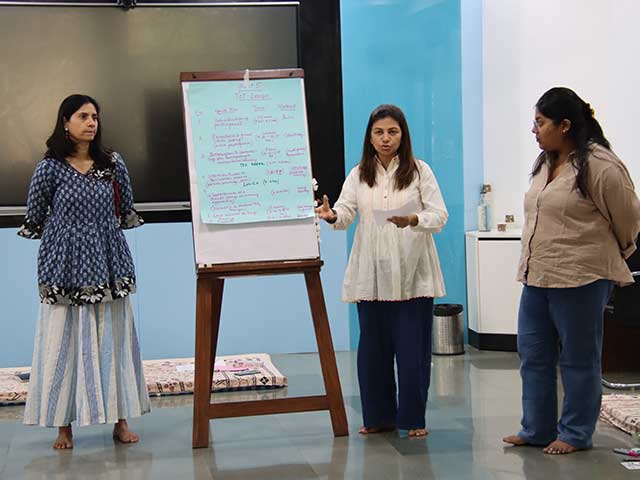
Developing an understanding of the benefits of using the Theory of Change approach in development planning, monitoring, and impact assessment.
Developing an understanding of the benefits of using the Theory of Change approach in development planning, monitoring, and impact assessment.

Advanced Participatory Methods for Collective Action and Social Change is designed for learners who already have a foundational understanding of participatory research.
Advanced Participatory Methods for Collective Action and Social Change is designed for learners who already have a foundational understanding of participatory research.
No reviews yet. Be the first to review this course!