
PIA today has over 2000 alumni from 35 countries and has linkages with several universities in India and Canada for course development, course teaching and internships.
Designing a programme is not a linear exercise of planning, implementation, and assessment; rather, it is a collective process shaped by the experiences, knowledge, and actions of diverse stakeholders. At the heart of this process are communities -the individuals and groups whose lives programmes seek to influence and improve. Yet, too often, social interventions are designed, monitored, and evaluated without the meaningful involvement of those most affected by them. Decisions about what constitutes success, whose voices are heard, and what evidence matters are frequently concentrated among donors, experts, and institutions, reinforcing existing power imbalances and limiting the agency of communities.
Traditional Monitoring, Evaluation, and Learning (MEL) approaches have often relied on top-down and expert-driven methods that privilege technical knowledge over lived experience. Such approaches can result in evaluation processes that are extractive, where communities are treated primarily as sources of data rather than partners in generating knowledge and driving change. Existing social hierarchies related to gender, caste, class, ethnicity, age, disability, and other forms of marginalisation can further influence who participates, whose perspectives are valued, and who benefits from programme decisions.
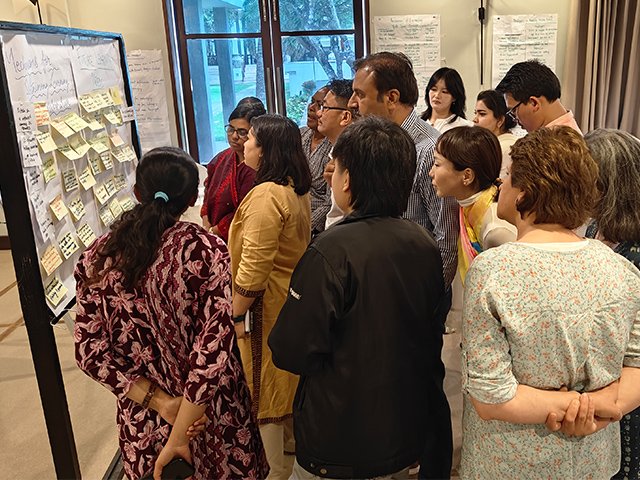
Participatory Monitoring, Evaluation, and Learning (PMEL) emerged in response to these challenges. By bringing together communities, civil society organisations, programme teams, local institutions, funders, and other stakeholders, PMEL seeks to democratise the production and use of evidence. It creates opportunities for stakeholders to jointly define goals, identify indicators of success, generate and analyse evidence, and use learning to improve practice, drawing on participatory action research and participatory research methodology to ground this collaboration in rigorous, community-owned inquiry. In doing so, PMEL helps shift relationships from consultation to collaboration and from accountability upwards to accountability in multiple directions, particularly towards communities.
Central to PMEL is the recognition that measuring change is not simply about counting outputs and outcomes. It is equally about understanding shifts in power, agency, inclusion, voice, relationships, and collective action. PMEL asks critical questions: Who defines what change matters? Whose knowledge is considered legitimate? Who controls resources and decision-making? How are the perspectives of marginalised groups represented?
Addressing these questions requires intentional strategies such as inclusive facilitation, community-led data collection and analysis, safe spaces for dialogue, disaggregated data, participatory sense-making processes, and shared decision-making mechanisms that ensure diverse voices influence programme directions.
This workshop is designed for a wide range of development professionals, including:
Development practitioners, programme officers, researchers and project managers interested in monitoring, evaluation and learning (MEL)
CSR teams involved in social impact assessment and evaluation of programmes
NGO staff engaged in strategic planning for organisations and management.
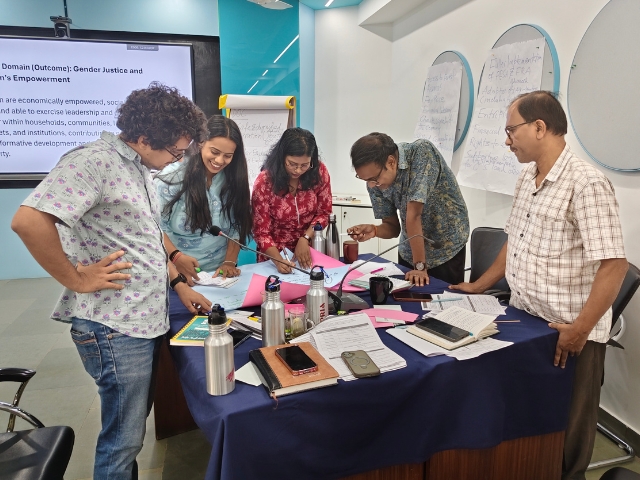
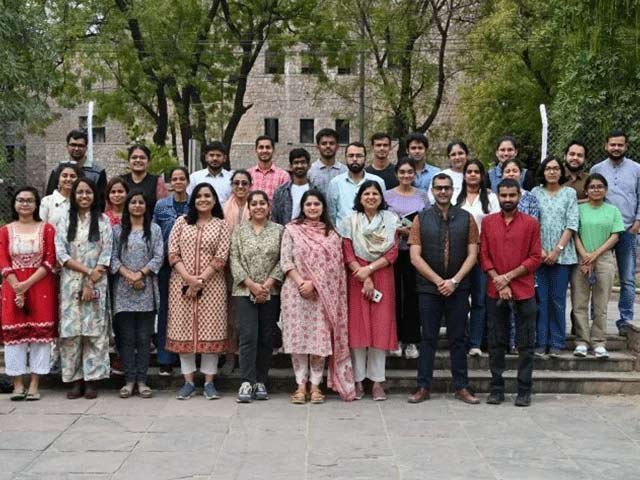
This course equips learners with the knowledge and tools to conduct ethical, inclusive, and participatory research effectively.
This course equips learners with the knowledge and tools to conduct ethical, inclusive, and participatory research effectively.
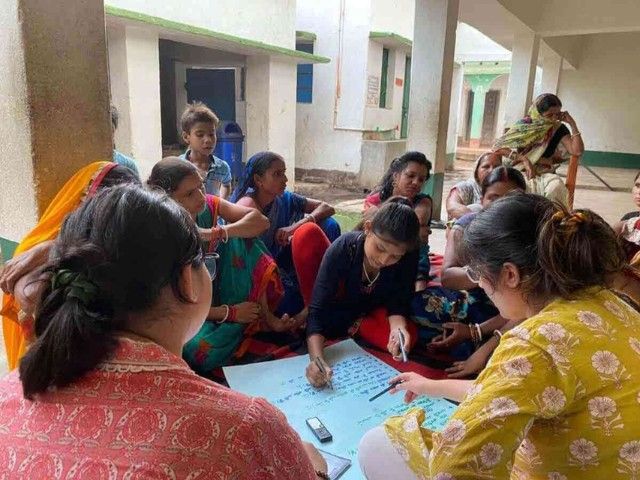
A hands-on program training SHG women to test and monitor local water quality using simple tools and social mapping, highlighting its link to public health.
A hands-on program training SHG women to test and monitor local water quality using simple tools and social mapping, highlighting its link to public health.
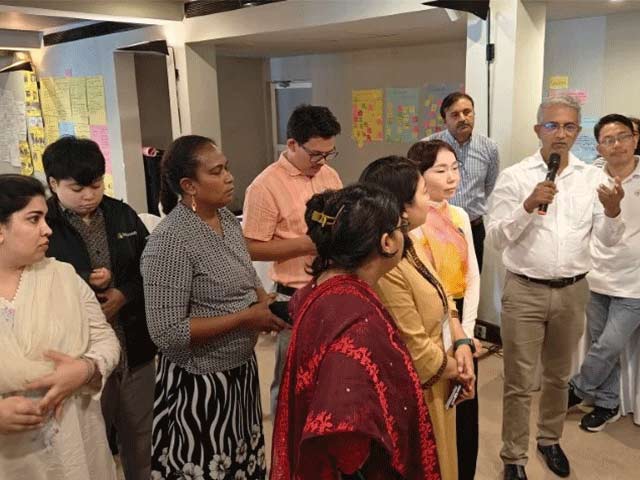
This course helps young leaders build practical skills in policy advocacy, accountability, collaboration, and civic engagement.
This course helps young leaders build practical skills in policy advocacy, accountability, collaboration, and civic engagement.

An introductory workshop exploring participatory frameworks, ethical engagement, and community collaboration.
An introductory workshop exploring participatory frameworks, ethical engagement, and community collaboration.
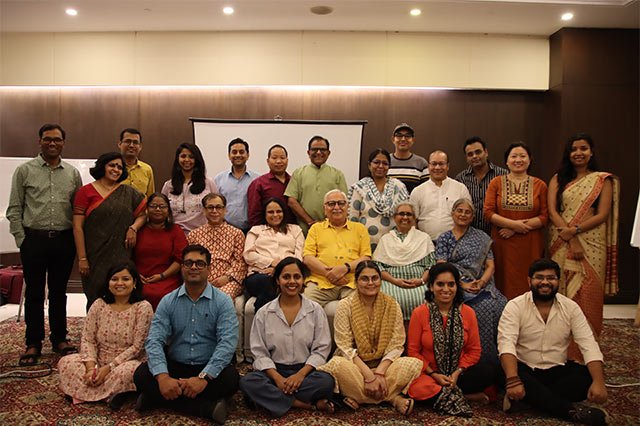
This course provides hands-on Training of Trainers (ToT) skills to help facilitators create inclusive, interactive, and learner-centred training programmes.
This course provides hands-on Training of Trainers (ToT) skills to help facilitators create inclusive, interactive, and learner-centred training programmes.
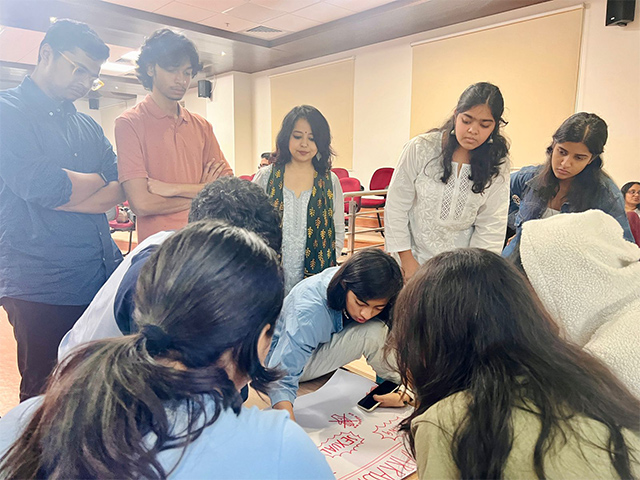
Sexual harassment is one of the major forms of discrimination in the workplace today.
Sexual harassment is one of the major forms of discrimination in the workplace today.
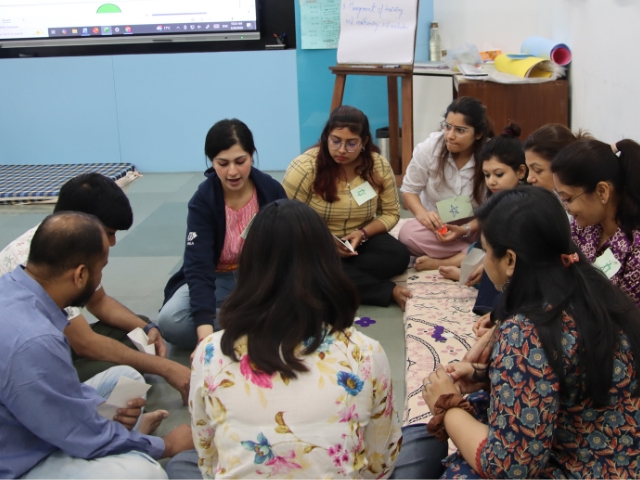
Build the skills to design and facilitate engaging, learner-centred training using participatory methods.
Build the skills to design and facilitate engaging, learner-centred training using participatory methods.
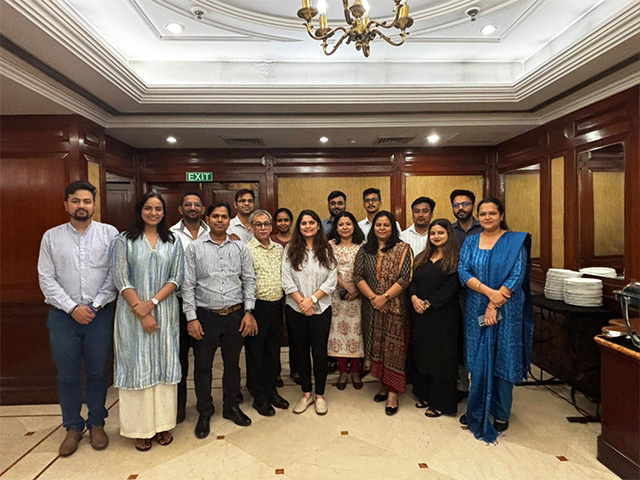
Strengthen your leadership and management capabilities to lead teams effectively, drive collaboration, and achieve organisational success.
Strengthen your leadership and management capabilities to lead teams effectively, drive collaboration, and achieve organisational success.
Build practical skills to design, implement, and manage strategic plans that drive organisational growth, resilience, and long-term impact.
Build practical skills to design, implement, and manage strategic plans that drive organisational growth, resilience, and long-term impact.
No reviews yet. Be the first to review this course!