
PIA today has over 2000 alumni from 35 countries and has linkages with several universities in India and Canada for course development, course teaching and internships.
Development practitioners are often asked, "What is your theory of change?". Prompting many to reflect on whether they have clearly articulated one.
In an increasingly complex world, any development intervention that seeks to create meaningful change must be grounded in a clear understanding of how that change will occur. Every project or programme is based on a set of assumptions or hypotheses; together, these form a theory of change.
However, traditional linear models of social change, built on rigid and often simplistic frameworks, are proving inadequate in addressing today’s dynamic realities. There are multiple ways to design change pathways, define change domains, and assess progress towards a shared vision. A flexible, adaptive, and context-sensitive approach to understanding development processes and measuring outcomes is now essential.
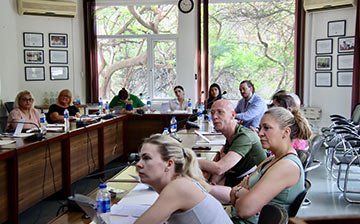
PRIA International Academy’s two-day, face-to-face workshop on “Using Theory of Change for Greater Impact” is designed to address this need. The workshop will equip participants with strong conceptual perspectives on social and human development, along with practical analytical skills to design impactful programmes and projects. It will also build confidence in communicating the “why” and “how” of interventions, both within organisations and with external stakeholders. Participants will learn to unpack assumptions and construct robust frameworks that support greater impact.
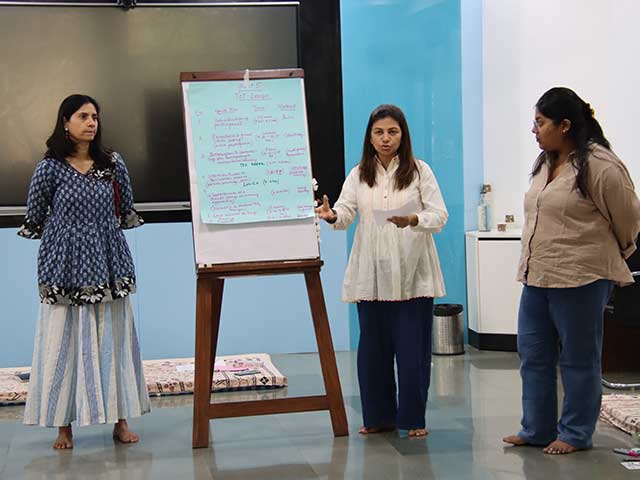
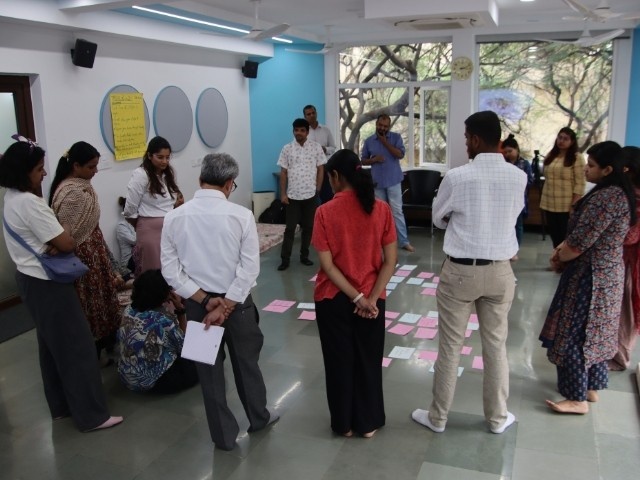
A course that helps you learn how to plan and facilitate interactive trainings using participatory and experience-based methods.
A course that helps you learn how to plan and facilitate interactive trainings using participatory and experience-based methods.
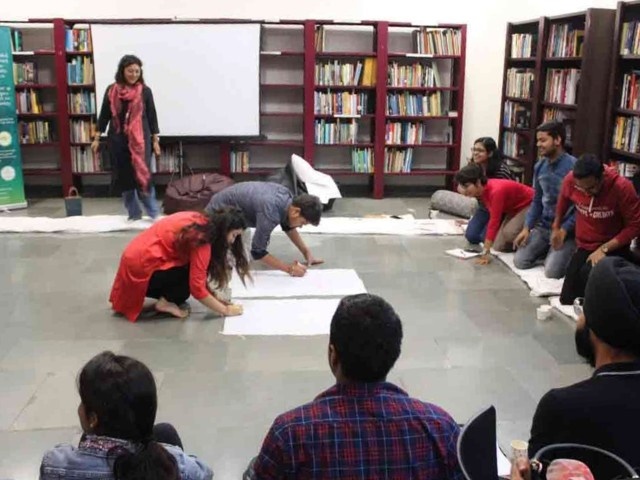
Build practical skills to plan, monitor, evaluate, and measure the impact of development initiatives using participatory methods.
Build practical skills to plan, monitor, evaluate, and measure the impact of development initiatives using participatory methods.

An introduction to social accountability that explores how citizen participation strengthens transparency, service delivery, and democratic governance.
An introduction to social accountability that explores how citizen participation strengthens transparency, service delivery, and democratic governance.
A course that explains how gender shapes power, inequality, and everyday life and how we can work toward more inclusive, gender-just societies.
A course that explains how gender shapes power, inequality, and everyday life and how we can work toward more inclusive, gender-just societies.

A beginner-friendly course on how Panchayati Raj empowers local governments and strengthens grassroots democracy in India.
A beginner-friendly course on how Panchayati Raj empowers local governments and strengthens grassroots democracy in India.
A global introduction to Participatory Research, exploring its principles, tools, and community-driven approach to knowledge and social change.
A global introduction to Participatory Research, exploring its principles, tools, and community-driven approach to knowledge and social change.

Advanced Participatory Methods for Collective Action and Social Change is designed for learners who already have a foundational understanding of participatory research.
Advanced Participatory Methods for Collective Action and Social Change is designed for learners who already have a foundational understanding of participatory research.
No reviews yet. Be the first to review this course!