PIA today has over 2000 alumni from 35 countries and has linkages with several universities in India and Canada for course development, course teaching and internships.
Across disciplines and regions, there is growing demand for research that is socially relevant, ethically grounded, and capable of generating real-world impact. In response, researchers and institutions are increasingly recognising the importance of co-constructing knowledge with communities, rather than treating them merely as subjects of research.
Within this shift, community engagement and community-based participatory research (CBPR) have emerged as key areas of professional competence globally. CBPR is shaping research and action in fields such as climate resilience, public health, food and nutrition security, and sustainable development, areas where locally grounded knowledge and collective problem-solving are essential. Despite its growing relevance and policy endorsement, global studies by the UNESCO Chair in Community-Based Research and Social Responsibility in Higher Education highlighted significant gaps in the practice of CBPR worldwide. This concern closely aligns with the UNESCO Recommendation on Open Science, which calls for meaningful engagement with societal actors and dialogue across diverse knowledge systems.
To address these gaps, the UNESCO Chair, under the leadership of Dr. Rajesh Tandon and Dr. Budd Hall, developed a pioneering pedagogy for capacity building in CBPR through the Knowledge for Change (K4C) initiative. Over time, this initiative has grown into the K4C Global Consortium, bringing together learning and practice hubs across multiple countries, including India, and creating a global platform for shared learning and practice. In India, the programme aligns strongly with the National Education Policy (NEP) 2020, which calls on higher education institutions to embed social responsibility, experiential learning, and community engagement within teaching and research. National initiatives such as the Unnat Bharat Abhiyan (UBA) further reinforce this direction. At the same time, there remains a clear need for formal training that supports educators and young researchers in translating policy aspirations into meaningful, community-engaged practice.
Developed in partnership with K4C hubs in India and guided academically by the UNESCO Chair, the Master Training Programme responds directly to this need. It also builds on India’s growing institutional commitment to CBPR, reflected in initiatives led by bodies such as the UGC and AICTE.
Building on this momentum, the India K4C Consortium complements national capacity-building initiatives such as the Malviya Mission Teacher Training Centres (MMTTCs) and UGC two-credit course on Community Engagement and Social Responsibilities under the Unnat Bharat Abhiyan.
Rooted in this globally recognised pedagogy, the Master Training Programme offers a structured, practice-based pathway for learning and applying CBPR. The programme is delivered by a global faculty of experienced and certified CBPR practitioners, who bring decades of experience in teaching, research, and field-based practice across diverse cultural, disciplinary, and institutional contexts. Through this programme, participants join a global learning community and gain the skills, perspectives, and confidence needed to advance inclusive, community-engaged research and education.
Programme Components: The training programme provides an overview of CBPR, its principles, objectives, and methods. Through hands-on learning, an in-person residency, and a field-based component, participants will strengthen their participatory research skills and build confidence in mentoring and facilitating CBPR processes. The programme connects CBPR concepts to practical research and institutional contexts, with a focus on translating research findings into ethical, actionable insights for communities, institutions, and policy. Participants will also undertake locally supervised community-based research projects, applying CBPR methods in real-world settings while engaging with community stakeholders and reflecting on their learning.
|
Dates |
Sessions |
Facilitator |
|
9 March 2026 (Online) |
Introductory Meeting and Overview of the Training |
Dr. Rajesh Tandon |
|
18 March 2026 (Online) |
CBPR Principles and Methods |
Dr. Catherine Etmanski |
|
23-28 March 2026 (In-person Residency at Christ University, Bangalore) |
In-Person Residency at CHRIST University, Bengaluru |
Dr. Rajesh Tandon |
|
1 April 2026 (Online) |
Reflections on Residency and Field Plans |
Dr. Budd Hall |
|
13 April 2026 (Online) |
Knowledge Mobilisation |
Dr. Irma Alicia Flores Hinojos |
|
14 April – 25 April 2026 |
Field Study |
|
|
29 April 2026 (Online) |
Culmination and Valedictory |
|
Location: India
Who can apply? This programme is designed for university faculty, PhD scholars, and early-career researchers who want to conduct research that is ethical, socially relevant, and transformative. Through a mix of conceptual learning and practical fieldwork, participants will gain the skills to embed social responsibility into their institutions and drive systemic change in higher education and society.
Mode of Delivery: Hybrid (Virtual, In-person, and Field Practicum)
Duration: 8 Weeks [9 March – 29 April, 2026: Includes a six-day face-to-face residency at CHRIST University, Bengaluru (23–28 March, 2026)]
Training Methodology: The India MTP follows a blended learning approach combining:
Registration Fees: The fee is ₹25,000 (inclusive of GST) for the full eight-week programme, including the six-day in-person residency. Travel to and from the venue (CHRIST University, Bangalore) is not included. This subsidised fee ensures wider accessibility.
Certificate: Certificate will be issued on successful completion of course.
Knowledge and Organising Partners:

This training deepened participants’ understanding of participatory research principles, ethics, and tools. It combined theory with real-world examples, helping learners design inclusive and community-driven research projects.
This training deepened participants’ understanding of participatory research principles, ethics, and tools. It combined theory with real-world examples, helping learners design inclusive and community-driven research projects.

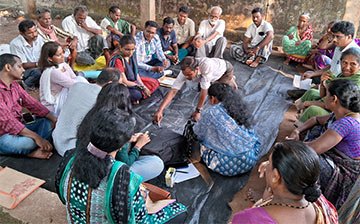
A hands-on program training SHG women to test and monitor local water quality using simple tools and social mapping, highlighting its link to public health.
A hands-on program training SHG women to test and monitor local water quality using simple tools and social mapping, highlighting its link to public health.

This training built the capacity of young leaders to engage in policy advocacy and accountability. It emphasized collaboration, contextual learning, and peer exchange to inspire effective youth-led action.
This training built the capacity of young leaders to engage in policy advocacy and accountability. It emphasized collaboration, contextual learning, and peer exchange to inspire effective youth-led action.

An introductory workshop exploring participatory frameworks, ethical engagement, and community collaboration.
An introductory workshop exploring participatory frameworks, ethical engagement, and community collaboration.
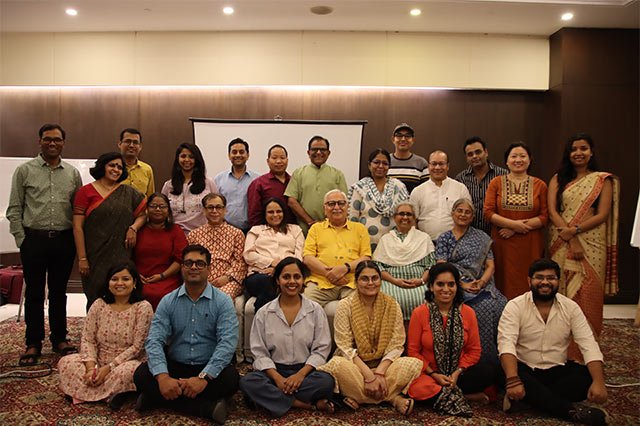
A 3-day, practice-focused Training of Trainers (ToT) that helps facilitators and educators move from theory to action.
A 3-day, practice-focused Training of Trainers (ToT) that helps facilitators and educators move from theory to action.
No reviews yet. Be the first to review this course!